
Table of Contents
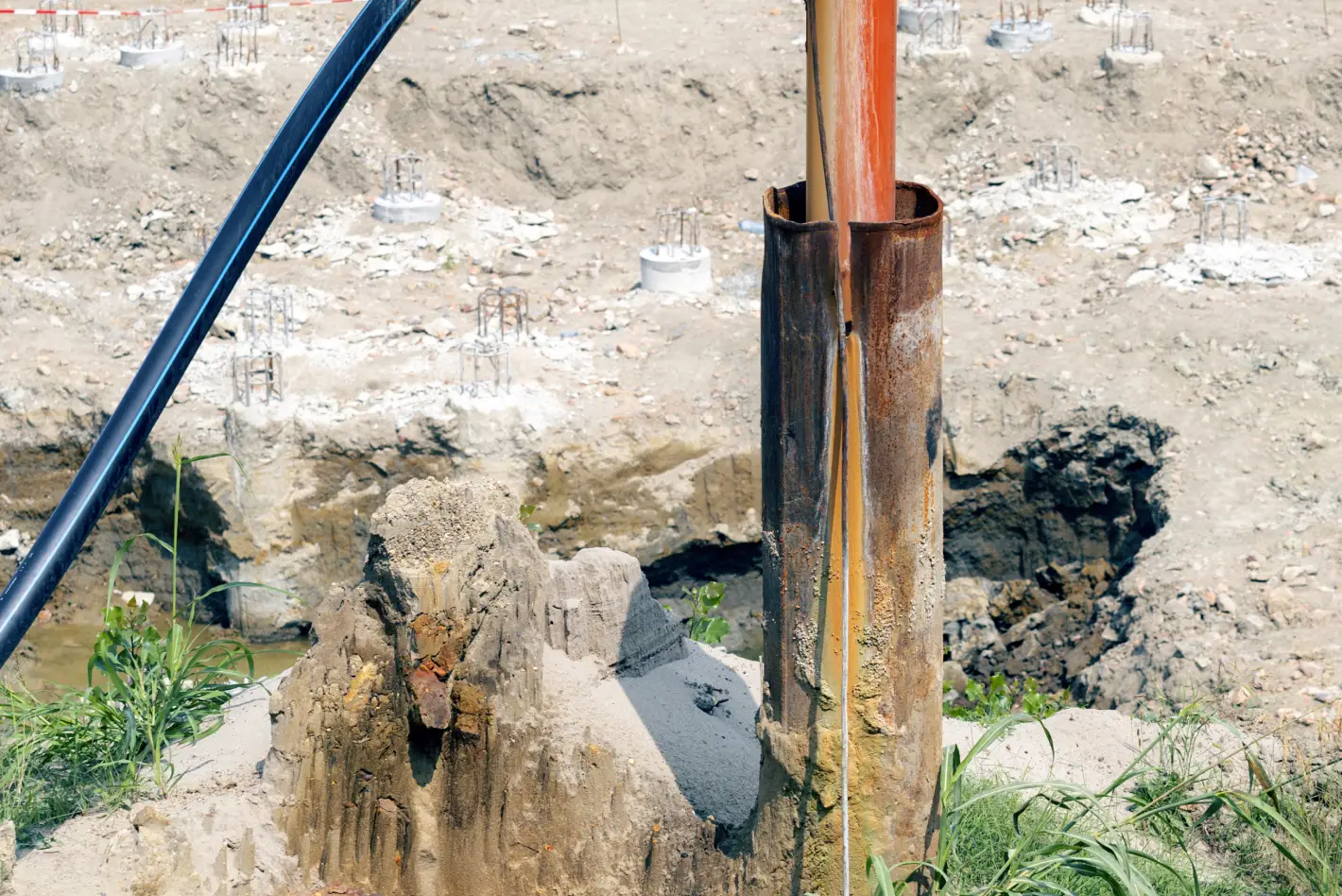
Deep well borehole installation at a excavation site.
What Is Deep Well Dewatering?
Deep well dewatering is a groundwater control method used for deep excavations and high water table conditions. It involves installing submersible pumps inside drilled boreholes to lower groundwater levels safely and efficiently.
Unlike surface pumping methods, deep wells achieve greater drawdown depths, making them ideal for infrastructure and basement construction projects.
Why Groundwater Control Is Critical
Uncontrolled groundwater can lead to:
- Soil instability
- Structural settlement
- Excavation collapse
- Project delays
- Increased construction costs
Warning:
Failure to manage groundwater properly can compromise both safety and structural integrity.
Effective dewatering ensures a dry, stable, and secure excavation environment.
How Deep Well Systems Work (Step-by-Step Guide)
Hydrogeological assessments determine soil permeability, groundwater depth, and inflow rate.Hydrogeological assessments determine soil permeability, groundwater depth, and inflow rate.
1. Site Investigation
Hydrogeological assessments determine soil permeability, groundwater depth, and inflow rate.
2. Borehole Drilling
Deep vertical boreholes are drilled around or within the excavation area.
3. Installation of Well Casing & Filter
Perforated casing and filter materials prevent soil intrusion.
4. Submersible Pump Placement
High-capacity submersible pumps are installed within the wells.
High-capacity submersible pumps are installed within the wells.
High-capacity submersible pumps are installed within the wells.
5. Continuous Pumping
Water is pumped out to lower the groundwater table to a safe level.
6. Monitoring & Adjustment
Groundwater levels are monitored to maintain controlled drawdown.
Info:
Continuous monitoring prevents over-pumping, which can cause ground settlement.
Key Components of a Deep Well System
Uncontrolled groundwater can lead to:
- Drilled Boreholes
- Well Casings
- Filter Packs
- Submersible Pumps
- Discharge System
Where Deep Well Dewatering Is Used
Deep well systems are commonly used in:
- Basement construction
- Infrastructure projects
- iCoastal developments
- Large-scale commercial projects
Deep Well vs WellPoint Systems
| Feature | Deep Well System | WellPoint System |
| Excavation Depth | 20–100+ ft | Shallow (up to ~20 ft) |
| Water Volume | High inflow | Moderate inflow |
| Pump Type | Submersible | Vacuum based |
Tip:
Deep well dewatering requires precise engineering and continuous monitoring. It’s critical to have experienced specialists design and manage the system to ensure safety and long-term stability.
Speak to Our Experts
Final Thought
Deep well dewatering is a powerful and reliable solution for managing groundwater in complex excavation projects. Through proper design, installation, and monitoring, it ensures structural safety, operational efficiency, and long-term project success.
Callout:
Deep wells are preferred for projects requiring significant groundwater drawdown.
Want the Complete Groundwater Guide?

Frequently Asked Questions
For customized technical advice and site-specific solutions, contact us.
What is dewatering and why is it important for construction projects?
Dewatering is the process of removing or controlling groundwater to create dry and stable conditions for excavation and foundation work. Proper groundwater management prevents soil instability, structural damage, and project delays, ensuring safe and efficient construction.
Do you provide monitoring and maintenance during the project?
Dewatering is the process of removing or controlling groundwater to create dry and stable conditions for excavation and foundation work. Proper groundwater management prevents soil instability, structural damage, and project delays, ensuring safe and efficient construction.
How do you choose the right dewatering system for a project?
Dewatering is the process of removing or controlling groundwater to create dry and stable conditions for excavation and foundation work. Proper groundwater management prevents soil instability, structural damage, and project delays, ensuring safe and efficient construction.
Can dewatering affect surrounding structures or soil stability?
Dewatering is the process of removing or controlling groundwater to create dry and stable conditions for excavation and foundation work. Proper groundwater management prevents soil instability, structural damage, and project delays, ensuring safe and efficient construction.
Share


Related Posts

Have a project in mind? Let’s get it done right.
Speak with our experts for dependable, end-to-end dewatering solutions