
French Drain Systems for Groundwater
Carbondale designs and installs French drain systems to collect and redirect surface water and shallow groundwater away from foundations, basements, landscaped areas, roads, and construction zones. By combining a perforated drainage pipe with graded aggregate and filtration layers, a French drain provides a controlled pathway for water to move away from areas where accumulation could cause dampness, erosion, or drainage problems.
What is French Drain
A French drain is a subsurface drainage system designed to collect and redirect water through a perforated pipe installed inside a gravel-filled trench. Water enters the permeable aggregate and flows into the perforated pipe before being conveyed toward an appropriate discharge point.
Unlike active dewatering systems such as wellpoints, deep wells, or sump pumps, a French drain normally operates through gravity and natural hydraulic gradients rather than continuous pumping. This makes it particularly useful for long-term drainage protection around foundations, basements, landscaped areas, and other locations where recurring surface or shallow groundwater needs to be controlled.
At Carbondale, French drain systems are designed around soil conditions, groundwater levels, drainage requirements, site gradients, and the intended discharge location.
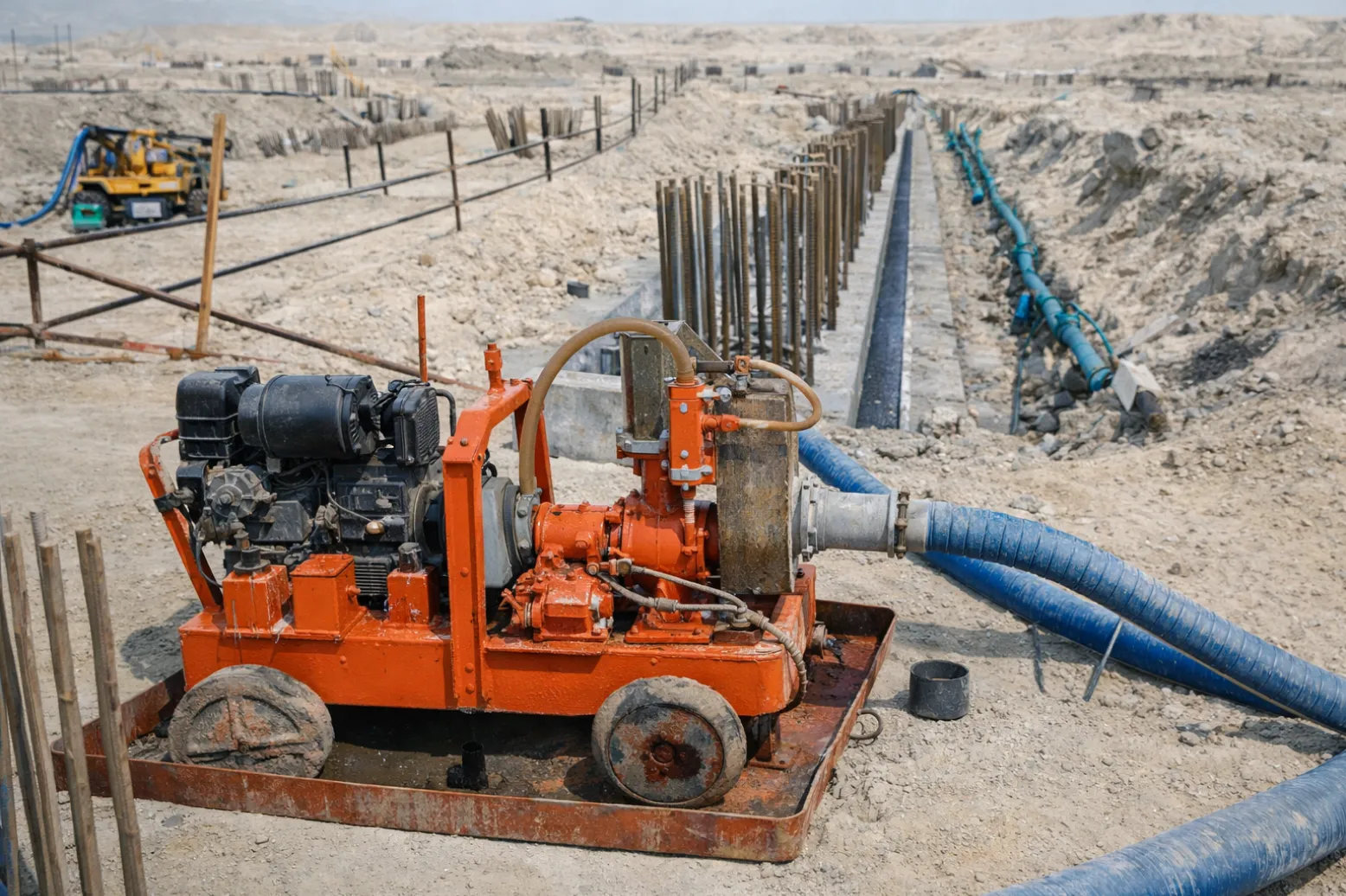
How French Drain Systems Work
A French drain works by providing water with a lower-resistance pathway away from the area that needs protection. Surface water or shallow groundwater moves through the surrounding soil and permeable gravel layer before entering the perforated drainage pipe.
The pipe collects the water and conveys it along the designed gradient toward an approved outfall, drainage network, collection point, or other suitable discharge location. Filter fabric or appropriately graded filter material helps prevent soil particles from entering the drainage aggregate and blocking the pipe.
Because the system relies primarily on gravity, the trench gradient, pipe level, surrounding soil permeability, pipe capacity, and discharge elevation are important factors in determining performance.
Where French Drains
Are Applied
Perforated drainage pipe – Collects water entering the drainage trench.
Graded gravel or drainage aggregate – Creates a permeable pathway for water to reach the pipe.
Filter fabric/geotextile – Helps prevent surrounding soil from migrating into the aggregate and clogging the system.
Drainage trench – Provides the space required for the pipe and filter material.
Pipe bedding – Supports the drainage pipe and helps maintain the designed alignment.
Pipe connections and fittings – Connect different sections of the drainage network.
Discharge/outfall – Provides the final route for collected water.
Inspection or cleanout points – Can provide access for inspection and maintenance where required.
Why French Drains Are Needed
- Efficient water redirection
- Protects Foundations and Structures
- Maintains Stable Ground Conditions
- Supports Smooth Construction Progress
French Drain Applications
- Foundation drainage
- Basement waterproofing support
- Yard and landscape drainage
- Waterlogged or low-lying areas
- Building perimeter drainage
- Construction excavation drainage
- Road and infrastructure drainage
- Underground utility projects
Installation Process
Site Assessment
Evaluate soil conditions, groundwater levels, and drainage requirements.
Trench Excavation
Dig a properly graded trench along the planned drainage path.
Pipe Installation
Place perforated pipes with correct slope for effective water flow.
Gravel & Backfilling
Add gravel and filter fabric to prevent clogging. Cover the system and restore the surface for final use.
Protect your property from water damage
Carbondale designs French drains suited to your site conditions.
Why Choose Carbondale for French Drains?
Carbondale provides engineered land drainage and groundwater-control solutions based on site-specific conditions. Our team can assess soil characteristics, groundwater conditions, surface-water movement, drainage requirements, and project constraints before developing an appropriate French drain configuration. Our capabilities cover system design, trench preparation, pipe installation, filtration and aggregate placement, drainage connections, and project-specific groundwater management. Carbondale also provides complementary groundwater-control systems, including wellpoints, deep wells, and sump pumping, allowing the drainage approach to be selected according to the project’s actual requirements.
Frequently Asked Questions
What are French drains?
French drains are drainage system that uses perforated pipes and gravel to redirect water away from structures, preventing water buildup and damage.
Where can French drains be installed?
They can be installed in basements, yards, around foundations, and landscaped areas to manage both surface and groundwater effectively.
Do French drains help with basement waterproofing?
Yes, French drains are commonly used as part of basement waterproofing systems to control water intrusion and maintain dry conditions.
How long do French drains last?
With proper installation and maintenance, a French drain system can last for many years while maintaining consistent performance.

Have a project in mind?
Speak with our experts for dependable, end-to-end dewatering solutions