
Pumping Test and Dewatering Design
Carbondale provides pumping tests and dewatering design for reliable groundwater control, giving contractors accurate site data before a dewatering system is specified, installed or priced.
What is a Pumping Test?
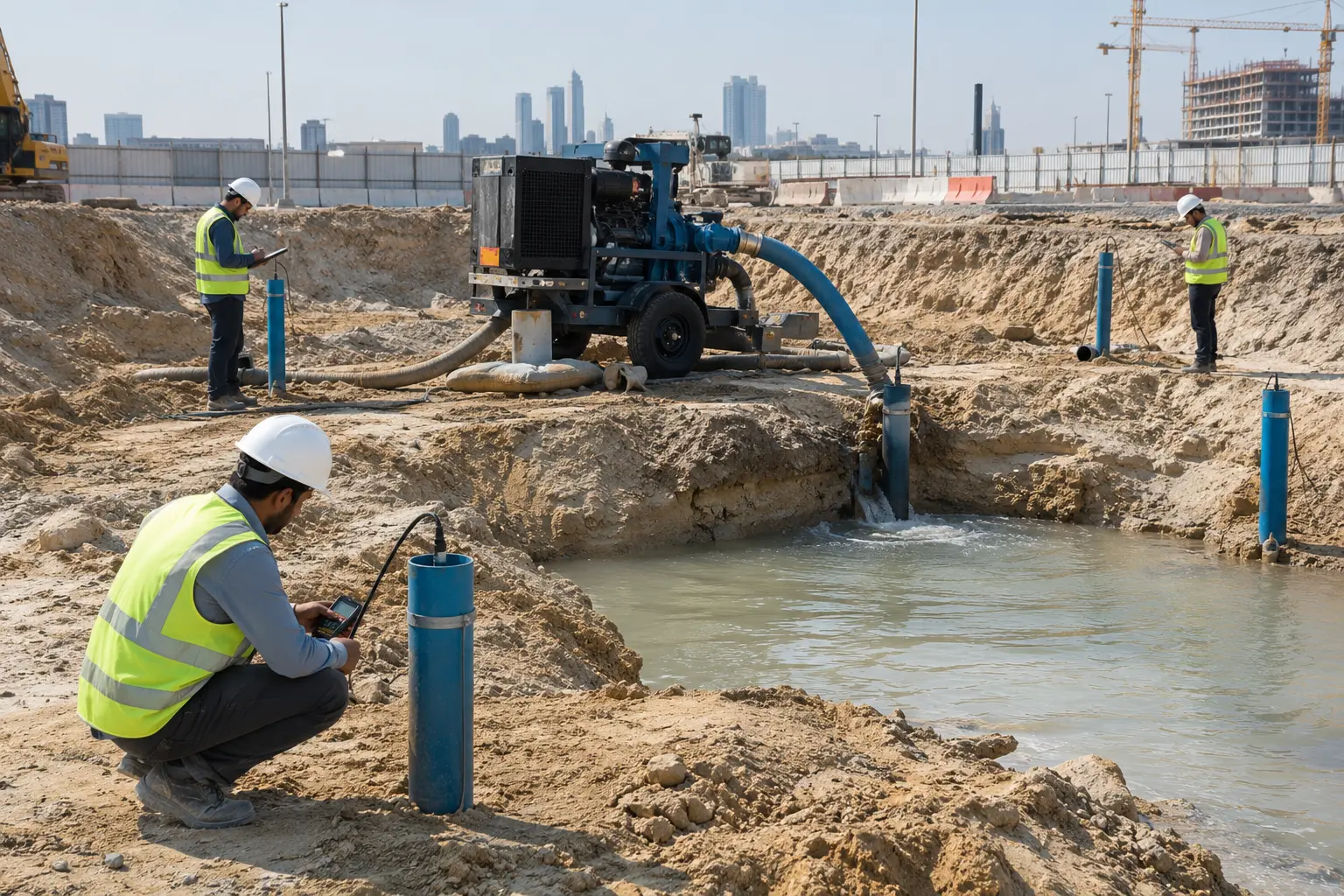
A pumping test is a controlled field test in which water is pumped from a test well at a known rate while water levels are recorded in the pumped well and in nearby observation wells. It shows how permeable the ground is and how groundwater responds to pumping.
Results are used to calculate permeability, transmissivity, storage and radius of influence, which are the key inputs for dewatering design.
At Carbondale, we plan, carry out and interpret pumping tests based on site-specific soil and groundwater conditions.
What is Dewatering Design?
Dewatering design is the engineering of a groundwater-control system for an excavation. It sets the method, well or wellpoint spacing, pump capacity and expected drawdown needed to keep the site dry and stable.
A good design reflects soil permeability, groundwater level, excavation depth and geometry, expected inflow and discharge requirements.
At Carbondale, we cover system design, installation, pumping, monitoring, water management and demobilization.
How Pumping Tests and Dewatering Design Work
A test well is installed on site, along with observation wells or piezometers at set distances. Water is pumped at a controlled rate, and groundwater levels, flow rate and recovery are logged throughout the test.
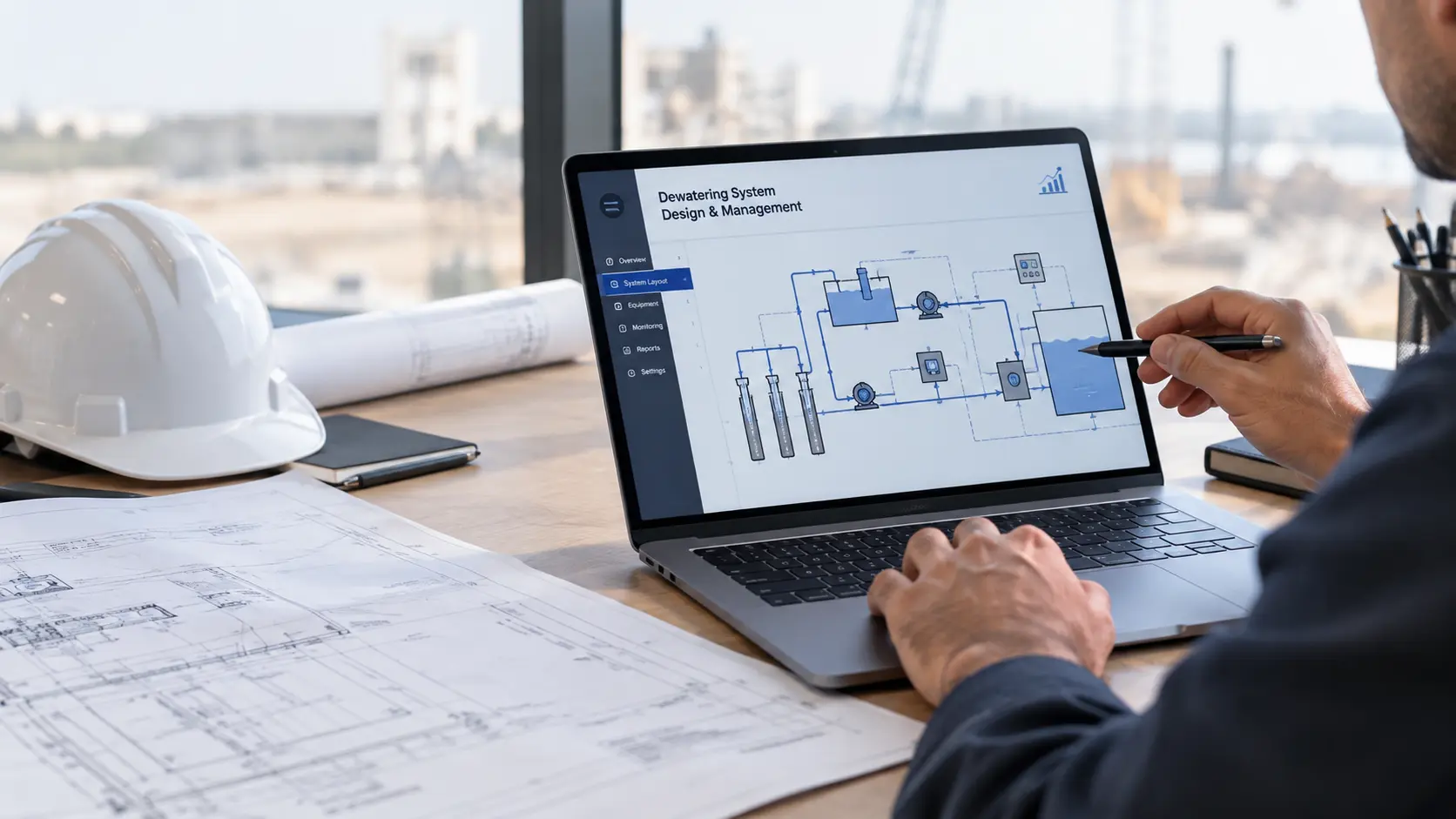
The data is then analysed to calculate aquifer parameters such as permeability (hydraulic conductivity), transmissivity and storage. These values feed into the dewatering design, which predicts how the groundwater table will respond to pumping.
The final design is shaped by soil conditions, groundwater level, excavation depth and geometry, expected inflow, and the required drawdown. Proper testing ensures the system is neither undersized nor over-specified.
Why Pumping Tests Are Needed
- Accurate aquifer and permeability data
- Reduced design uncertainty
- Better prediction of drawdown and inflow
- Support for discharge and regulatory approvals
Why Dewatering Design Is Needed
- Right-sized, cost-effective systems
- Dry, stable excavations
- Lower risk of delays and instability
- Support for discharge and regulatory approvals
Installation Process
Project and Ground Data Review
We review the geotechnical report, groundwater levels, excavation drawings and site constraints.
Test Planning
We select the test type, well locations, observation points and discharge route.
Test Well Installation
Test and observation wells are installed to the planned depth and layout.
Pumping Test Execution
Pumping, flow and water levels are recorded for the planned test duration.
Data Analysis
Results are analysed to determine permeability, transmissivity and radius of influence.
Dewatering Design
We design the system layout, pump capacity and predicted drawdown for the excavation.
Installation Support
Wellpoint, ejector or deep well systems are installed in line with the design.
Monitoring and Design Verification
Groundwater levels are monitored and the system is adjusted if site conditions differ.
Need pumping tests or dewatering design for your excavation?
Not sure what your site needs? Our team reviews your geotechnical report and recommends the right testing and dewatering approach before you commit to equipment.
Types of Pumping Tests We Carry Out
Step drawdown test – Increases pumping in stages to assess well performance and a sustainable yield.
Constant rate test – Pumps at a fixed rate over an extended period to determine aquifer properties and radius of influence.
Recovery test – Monitors water-level recovery after pumping stops to verify results.
Trial dewatering – Operates a small section of wellpoints or wells on site to confirm the design before full installation.
Dewatering Systems We Design
Wellpoint Systems – Shallow groundwater control using wellpoints, header pipes and vacuum-assisted pumps. performance and a sustainable yield.
Deep Well Systems – High-capacity control for deeper excavations and higher inflows.
Sump Pumping – Localised control of seepage and surface water.
French Drains – Land drainage solutions for permanent groundwater and surface water control.
Frequently Asked Questions
For customized technical advice and site-specific solutions, contact us.
What is a pumping test in dewatering?
A pumping test pumps water from a test well at a controlled rate while water levels are measured in nearby observation wells. The data shows how permeable the ground is and how groundwater responds to pumping, which is used to design the dewatering system.
Why is a pumping test needed before dewatering??
It replaces assumptions with measured data. This helps avoid undersized systems that fail to lower the water table and oversized systems that waste cost and energy.
How long does a pumping test take?
Duration depends on the test type, ground conditions and site requirements. Some tests are completed in hours, while others run for several days. We confirm the programme after reviewing your site data.
Can you design wellpoint, ejector and deep well systems?
Yes. We select the method based on soil permeability, excavation depth and required drawdown, and may combine methods where needed.

Have a project in mind?
Speak with our experts for dependable, end-to-end dewatering solutions
Why Carbondale
Your reliable groundwater control. Delivered with confidence.
Site-Specific Engineering
We design from measured site data and your geotechnical report rather than applying a standard system to every excavation. Each design reflects your soil permeability, groundwater level, excavation geometry and required drawdown.
Testing, Design and Installation in One Team
From pumping test planning through dewatering design, installation, pumping, monitoring and demobilization, one team stays accountable. This avoids handover gaps and keeps design intent intact during execution.
Right-Sized Systems That Control Cost
Accurate aquifer data helps us avoid undersized systems that fail to lower the water table and oversized systems that waste equipment, energy and budget. Wellpoint, ejector and deep well options are selected on evidence.
UAE and GCC Groundwater Experience
Our experience in dewatering and land drainage across the UAE and wider GCC means we understand local conditions, such as high groundwater, sandy and silty ground and coastal sites, as well as discharge and approval requirements.
Monitoring and Design Verification On Site
We track groundwater levels and system performance throughout the dewatering period and adjust the system if ground conditions differ from the design. Your excavation stays dry, stable and on programme.