
Wellpoint Dewatering for Shallow Excavations
Carbondale provides wellpoint dewatering systems for temporary groundwater control in shallow excavations, helping contractors maintain stable and workable conditions during below-ground construction.
What is Wellpoint Systems
A wellpoint dewatering system is a temporary groundwater-control method that lowers the water table around an excavation. It uses a series of small-diameter wellpoints installed in the ground to collect groundwater and direct it into a pumping system.
Wellpoint systems are particularly suited to shallow excavations and permeable ground, where groundwater can flow efficiently toward the installed wellpoints. System configuration depends on factors such as soil permeability, groundwater level, excavation depth, expected water inflow, and the required drawdown.
At Carbondale, we provide site-specific wellpoint solutions covering system design, installation, pumping, monitoring, water management, and demobilization.
How Wellpoint Systems Work
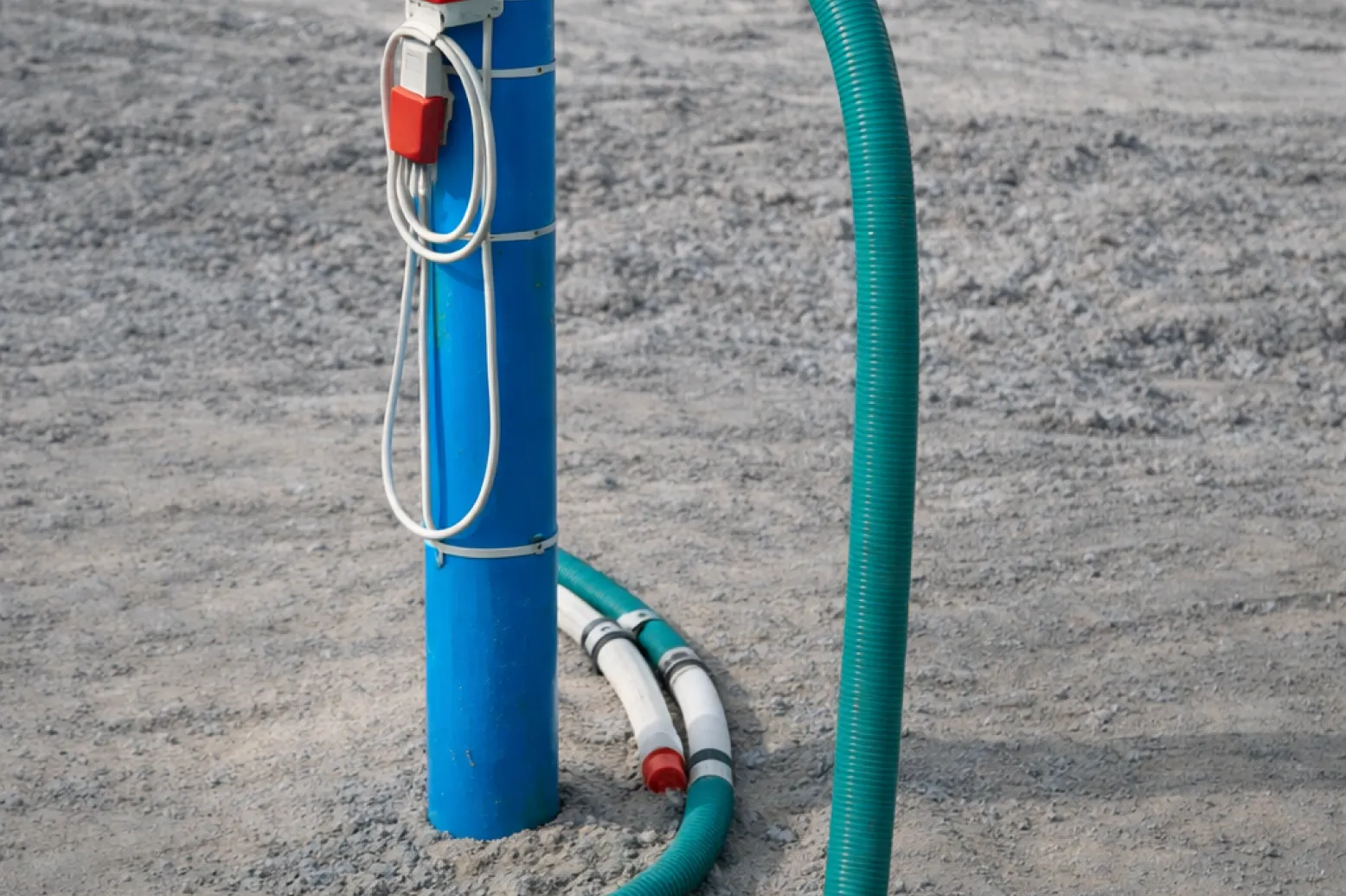
Wellpoints are installed around or alongside the excavation at calculated intervals and connected through riser pipes and a common header pipe. The header collects groundwater from multiple wellpoints and connects to a vacuum-assisted wellpoint pump.
As the pump operates, suction draws groundwater through the wellpoints and into the header system. Continued pumping lowers the groundwater table and creates a controlled drawdown zone around the excavation, helping maintain suitable conditions for construction.
System performance depends on wellpoint spacing, soil permeability, groundwater conditions, pumping capacity, excavation geometry, and required drawdown. Proper design ensures that groundwater inflow can be controlled throughout the construction period.
Key Components of a Wellpoint System
Wellpoints – Small-diameter groundwater collection points installed in the soil.
Riser pipes – Connect individual wellpoints to the header pipe.
Header pipe – Collects groundwater from multiple wellpoints.
Vacuum/wellpoint pump – Creates suction and removes collected groundwater.
Flexible connections – Connect the individual risers to the header.
Discharge pipework – Transfers extracted water to the designated discharge or treatment point.
Monitoring equipment – Used to check groundwater levels and system performance.
Why Well Point Systems Are Needed
- Cost-effective groundwater control
- Ideal for shallow depths
- Flexible system design
- Quick installation
Wellpoint Dewatering Applications
- Foundation excavations
- Basement construction
- Pipeline and sewer installation
- Drainage and utility trenches
- Road and civil works
- Shallow excavations with high groundwater levels
- Site preparation and construction support works
Installation Process
Site & soil assessment
We assess the soil conditions, groundwater level, excavation depth, site layout, and expected groundwater inflow.
System design
The wellpoint arrangement, spacing, header configuration, pumping capacity, and discharge requirements are designed around the project.
Well Point Installation
Wellpoints are installed around the excavation, using suitable installation techniques such as jetting or driving where appropriate.
Pump & Header Setup
The wellpoints are connected through riser pipes and a header pipe, which is connected to the wellpoint pump.
Commissioning and Drawdown
The pumping system is started and checked to confirm that groundwater is being collected and the required drawdown is being achieved.
Monitoring & Operation
Groundwater levels, pumping performance, and system conditions are monitored throughout the dewatering period.
Water management
Extracted groundwater is routed to appropriate filtration, settlement, treatment, or discharge points according to site requirements and applicable regulations.
Demobilization
Once below-ground construction is sufficiently complete and groundwater control is no longer required, the wellpoints and associated equipment are removed and the site is restored.
Need Wellpoint Dewatering for shallow groundwater control?
Not sure which system fits your site? Our team reviews your geotechnical report and recommends the right approach before you commit to equipment.
Why Choose Carbondale for Wellpoint Dewatering?
Carbondale Middle East provides engineered groundwater-control solutions based on site-specific conditions rather than using a standard system for every excavation. Our team can support projects from initial assessment and system design through installation, pumping, monitoring, water management, and demobilization. With experience in dewatering and land drainage across the UAE and wider GCC, Carbondale provides wellpoint solutions for construction, infrastructure, utility, and below-ground projects.
Frequently Asked Questions
For customized technical advice and site-specific solutions, contact us.
What is a wellpoint dewatering system?
A wellpoint dewatering system uses a series of small-diameter wellpoints connected to a header pipe and pump to lower groundwater around an excavation. It is commonly used for temporary groundwater control in shallow construction excavations.
How much groundwater drawdown can a wellpoint system achieve?
A wellpoint system can typically achieve approximately 6 metres of drawdown per stage under suitable conditions. Actual performance depends on soil permeability, groundwater conditions, pumping capacity, wellpoint arrangement, and other site-specific factors.
What type of soil is suitable for wellpoint systems?
Wellpoint systems generally perform best in sandy and other permeable soils, where groundwater can flow readily toward the wellpoints. Low-permeability soils may require alternative or supplementary dewatering methods.
When is a multi-stage wellpoint system required?
A multi-stage system may be required when the required groundwater drawdown exceeds the practical range of a single wellpoint stage. The exact configuration depends on excavation depth and site groundwater conditions.

Have a project in mind? Let’s get it done right.
Speak with our experts for dependable, end-to-end dewatering solutions